



Myanmar
Myanmar heard accusations that it is responsible for genocide against the Rohingya ethnic minority at the top court of the United Nations, as long-awaited hearings began on Monday.
The West African country of The Gambia first filed the case at the International Court of Justice in 2019, arguing a so-called “clearance operation” by Myanmar’s military in 2017 violated the 1948 Genocide Convention.
The Southeast Asian country, which has since been taken over by the military, has denied the allegations.
In his opening statements, Gambian Justice Minister Dawda Jallow said his country brought the case after its own experience with a military government.
"Nobody has been held responsible for the crimes against the Rohingya. The military that perpetrated the genocide actually felt emboldened to overthrow the civilian authorities again,” he said, addressing a full courtroom in The Hague.
Philippe Sands, the lawyer representing the Gambia, later said that the evidence of genocidal intent was “compelling and persuasive."
“It is perfectly possible for there to have been a counter-terror motive behind some of Myanmar's actions, but at the same time, in the course of those operations, a genocidal intent also existed and prevailed and in some form propelled the actions that were taken," he told the court.
'Unfortunate result'
Myanmar launched the campaign in Rakhine state in 2017 after an attack by a Rohingya insurgent group. Security forces were accused of mass rapes, killings and torching thousands of homes as more than 700,000 Rohingya fled into neighbouring Bangladesh.
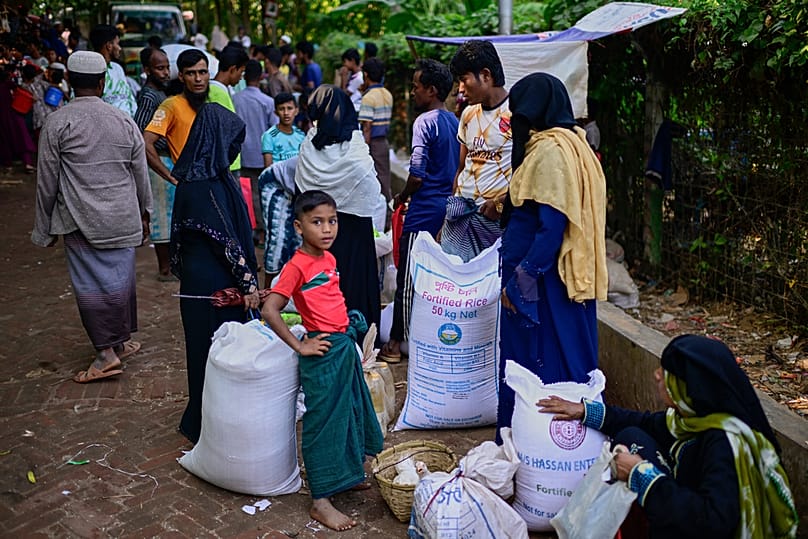
Now, some 1.2 million members of this persecuted minority are languishing in chaotic, overcrowded camps, where armed groups recruit children and girls as young as 12 are forced into prostitution.
The sudden and severe foreign aid cuts imposed last year by US President Donald Trump shuttered thousands of the camps’ schools and have caused children to starve to death.
Myanmar was initially represented at the court by Nobel Peace Prize winner Aung San Suu Kyi, who denied her country’s armed forces committed genocide, telling the ICJ in 2019 that the mass exodus of Rohingya people from the country she led was the unfortunate result of a battle with insurgents.
The pro-democracy icon is now in prison after being convicted of what her supporters call trumped-up charges after a military takeover of power.
Jallow told the court that Suu kyi had been “deprived of her liberty since she was swept from power by the same generals who continued to rule the country."
As well as denying the allegations, Myanmar contested the court’s jurisdiction, saying The Gambia was not directly involved in the conflict and therefore could not initiate a case.




01:14
UN marks 10th anniversary of day of genocide prevention and commemoration
01:37
Nicki Minaj backs Trump over persecution of christians in Nigeria
01:00
South Africa's finance minister slams Trump's genocide claims ahead of G20
01:14
ICJ says that Israel must allow UN humanitarian aid agency work in Gaza
01:07
BNP Paribas disputes US court verdict over role in Sudan atrocities
01:08
BNP Paribas shares drop after US court verdict on liability in Sudan atrocities